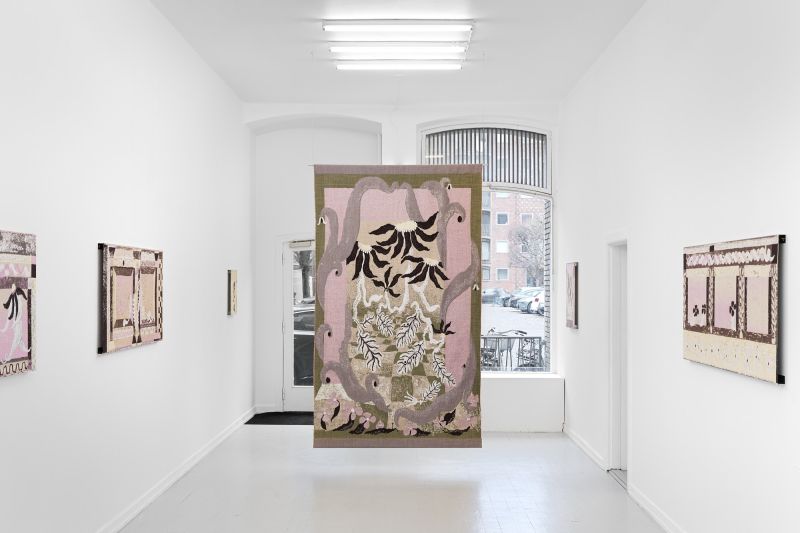
When you look back on textile traditions, the beautiful, tactile medium has long encompassed weaving, dyeing, and embroidery as ways of telling stories or marking moments in history. For Marie Holst, she is inspired by the motifs and techniques of classical textiles, particularly the florals that are depicted on tablecloths and rugs.
“As a tapestry weaver,” she says, “I’m deeply interested in how the medium has always functioned as a form of storytelling, almost cartoon-like. I’m interested in how working with digital jacquard weaving can revitalise the medium and be used to tell the stories of today. What are the grand narratives of our time? Which ones need to be told?”
It’s these very questions which drive her work and also give a platform to those who have long been ignored. “Historically, it has been the stories of society’s elites that were communicated, but I’m interested in trying to give voice to something or someone we don’t usually listen to.”
Marie lives and works in Copenhagen and graduated from the Royal Danish Academy of Fine Arts before establishing her own tapestry weaving practice. A large portion of her process involves sketching and drawing, before digitalising her creations and finishing up on the computer. From there, it’s a “collage-like” method that involves shifting elements around, playing with sizes and compositions.
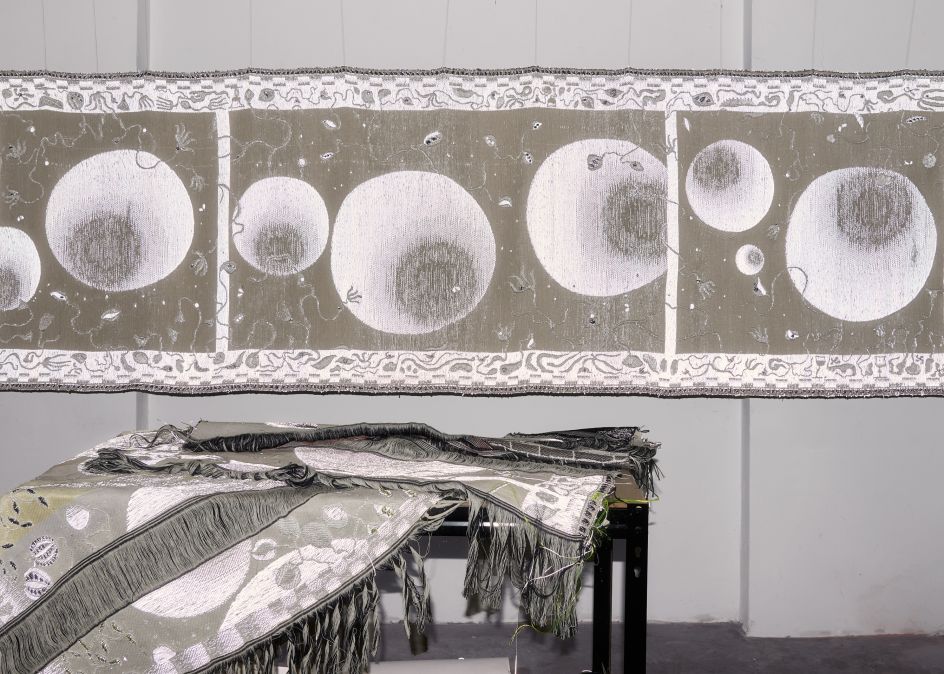
Lost & Found. Photography by Benjamin Lund
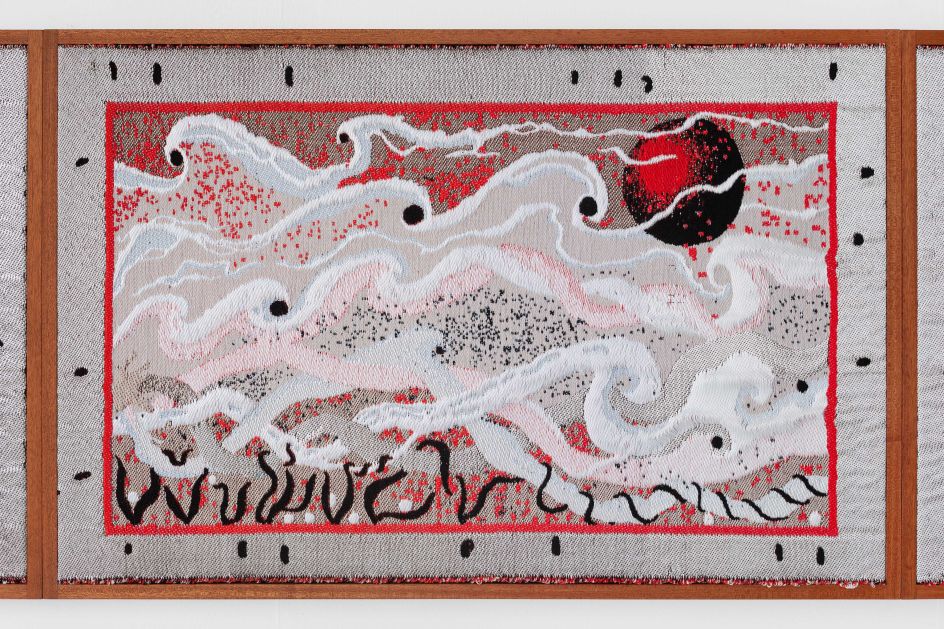
Cry Me a River 02. Photography by Jacob Friis-Holm Nielsen
Once she’s landed on the visuals, she will then translate them into a weave. “This is a very systematic and mathematical process of designing the different weave structures that create the various colours and textures in the work.” It’s a mix of computer work and loom testing, with plenty of back-and-forth. “That’s how it is when working with real materials. There are always unpredictabilities you can’t fully anticipate, so I test different yarns, colour blends, weave structures and so on.”
The final part is the actual weaving, which she says is the quickest step in the process. “All the work lies in the preparation. A woven structure is, in its essence, simple; always ‘just’ two sets of threads, warp and weft, and how they interlace with each other. This creates a limitation and a strict framework, but once you have accepted this very strict frame, there are endless combinations and variations.”
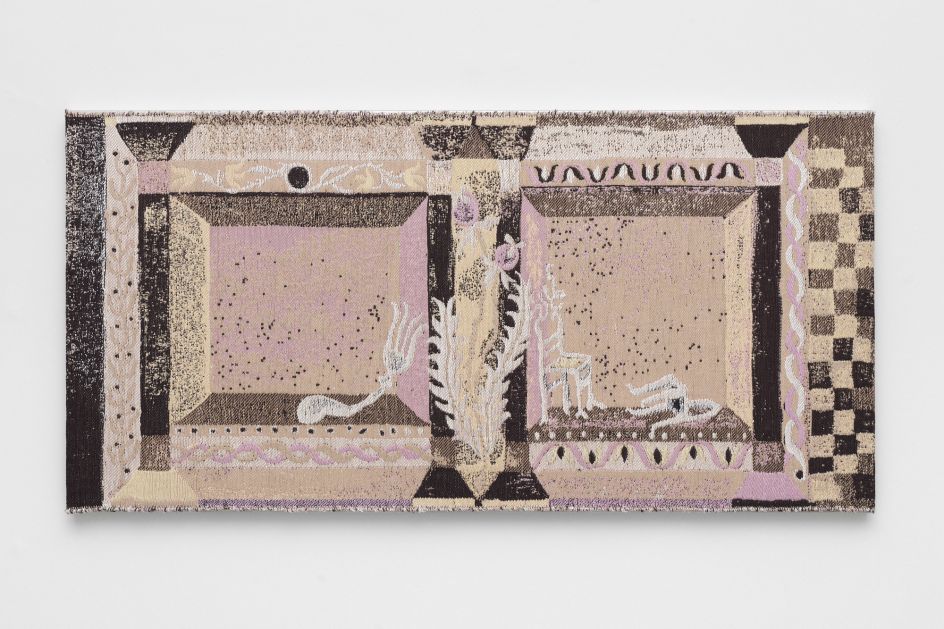
Scene 05, The Garden. Credit: Robert Damisch
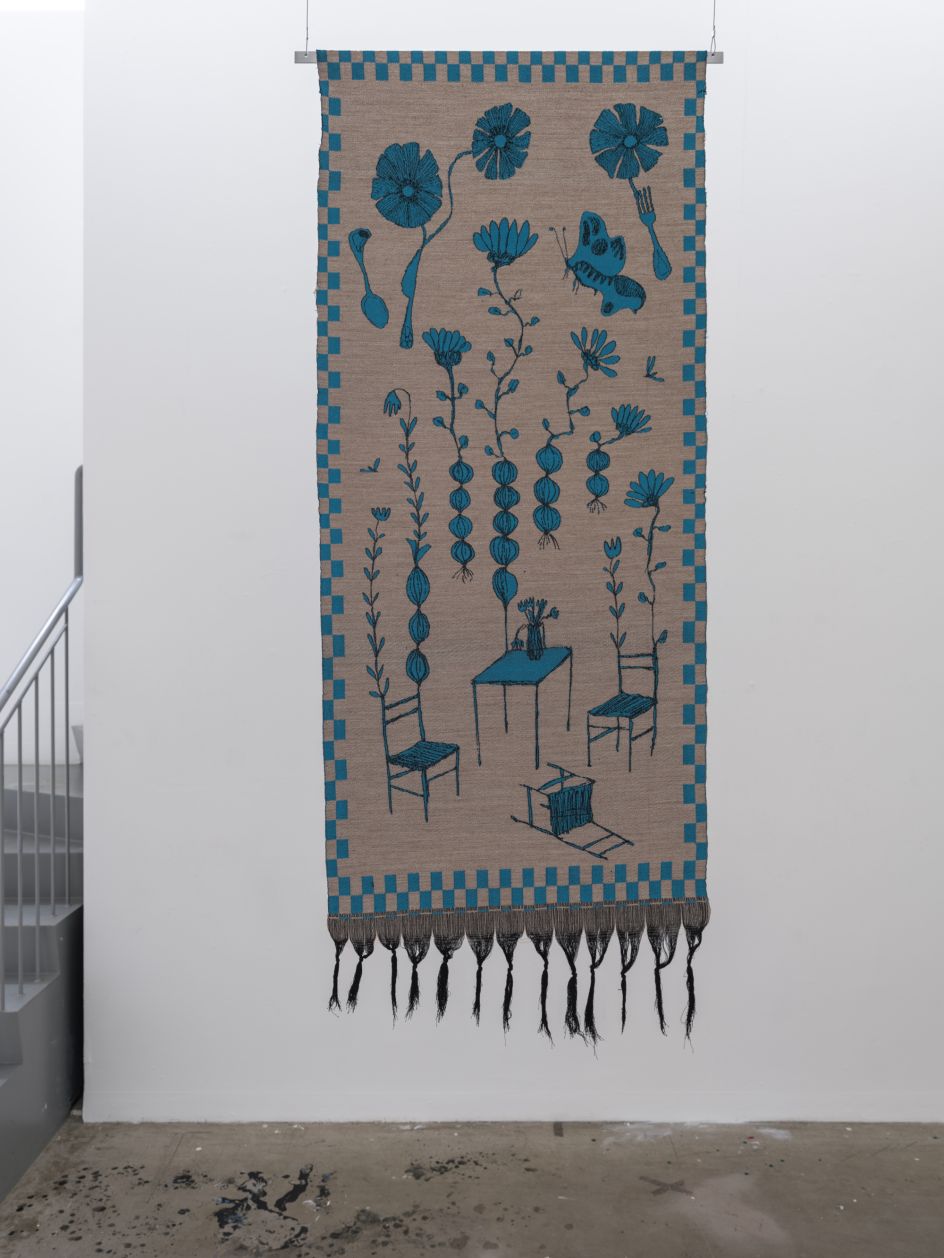
Loom Control I. Photography: Per Andersen
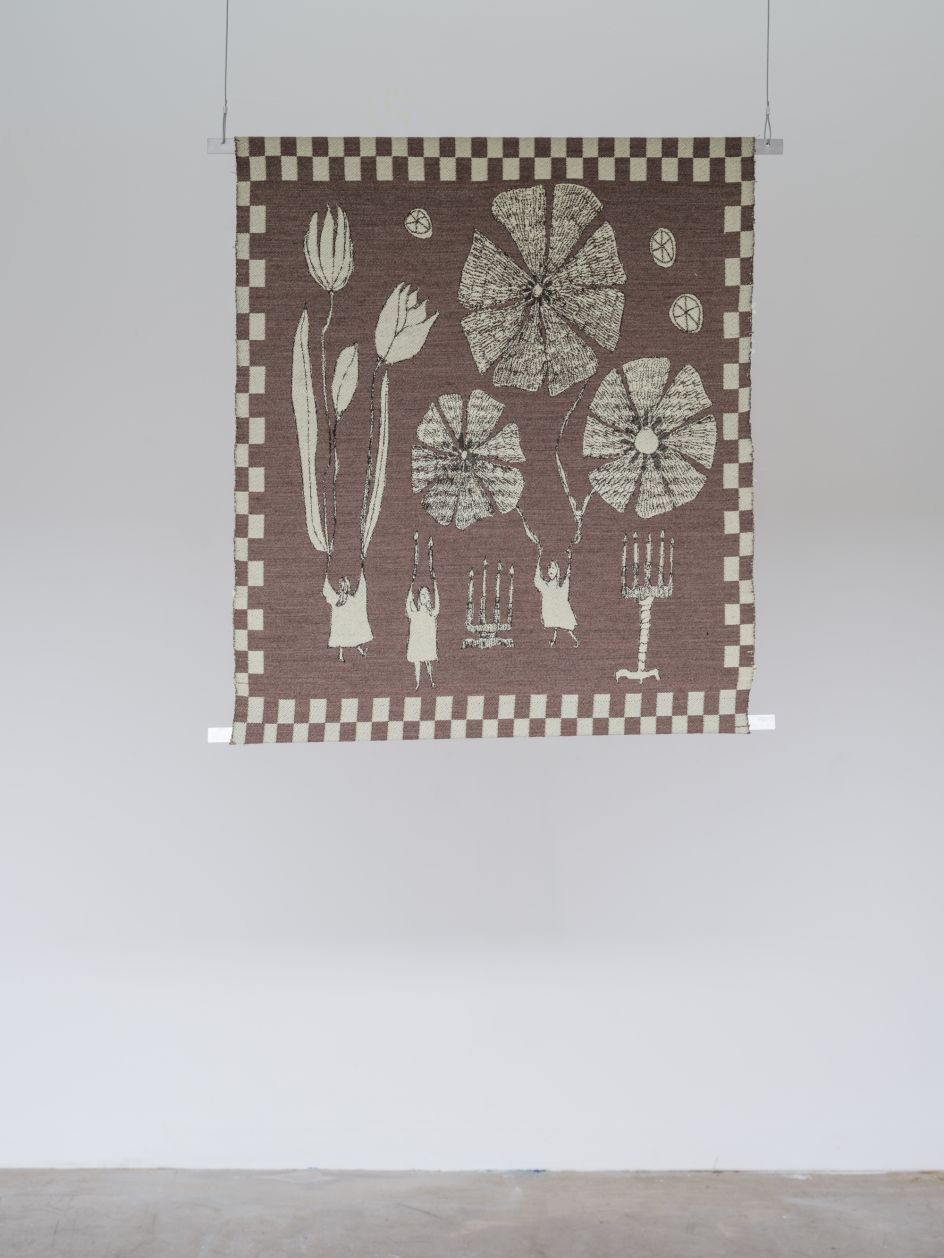
Loom Control II. Photography: Per Andersen
Marie’s tapestries are incredibly detailed, whether it’s a sepia-toned display of flowers or fragments of chairs, tiny people, and butterflies decorating a scene. Sometimes the pieces are spread over multiple displays – where the stitches act as pictograms revealing a different step of the story along the way, similar to hieroglyphics. In Cry Me a River, a work included in the Danish Biennale for Arts and Crafts, she’s created a six-metre-long tapestry divided into six chronological scenes about the sea. It begins with a prologue and is followed by five individual stories.
“I’ve been drawn to the sea as a motif,” she explains. “It’s widely used throughout classical art history, but as mentioned earlier, I’m interested in working with history as seen from our time. What does the sea as a motif look like today?” The piece uses a mix of matte and shiny yarns to create a surface that changes perspective with light, similar to how the sun or moonlight hits the waves.
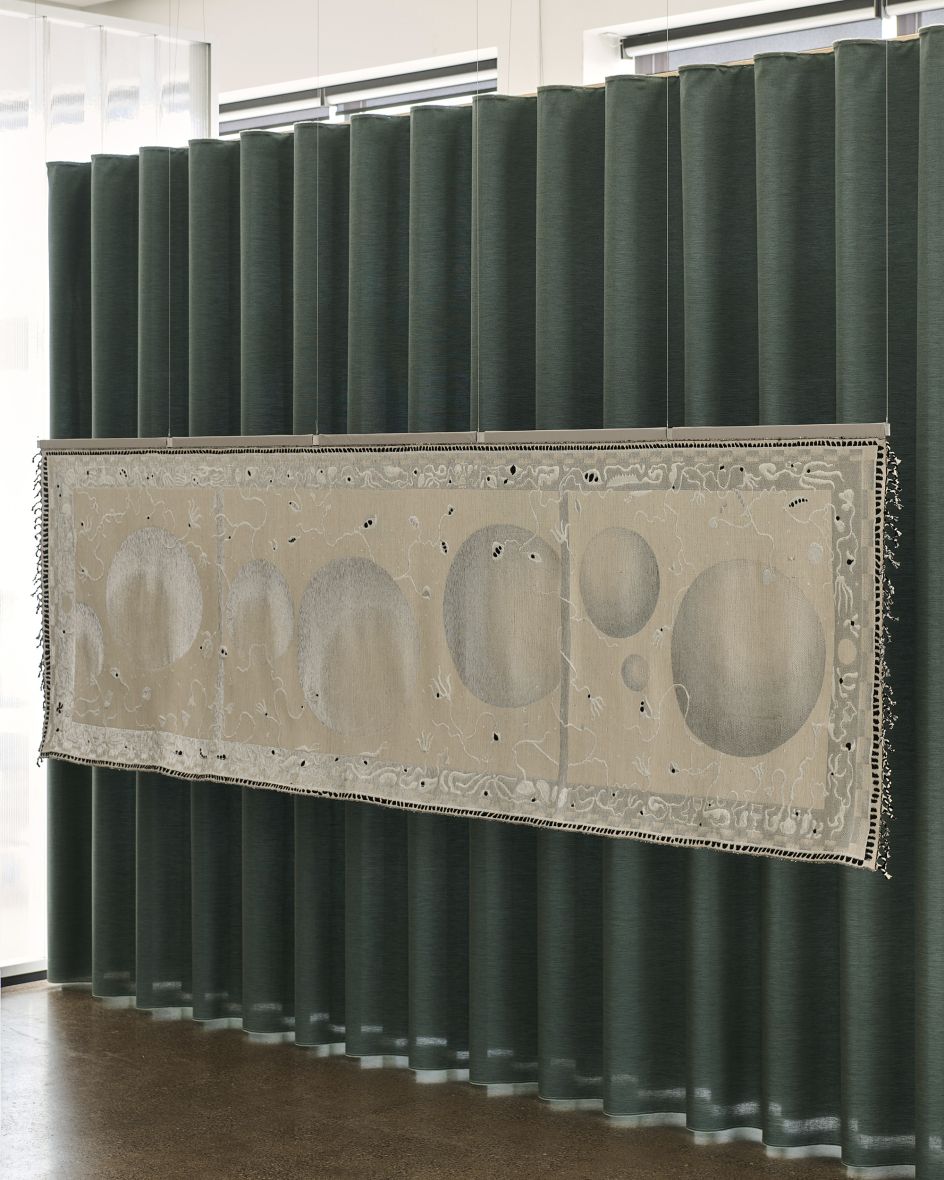
Lost & Found. Photography by Benjamin Lund
In another, Lost and Found, she interpreted the damask tablecloth and imagined someone discovering one stored away for decades, only to find it covered in overgrown plants and wildlife. Like Cry Me a River, it was also made with reflective yarn, and both are riddled with stories.
As a viewer, it will be hard not to find a comfy seat, wrap up snuggly and warm, and tuck yourself in – because when you look at these tapestries, you’re in for a good story.


